Today’s advances focus on scaling autonomous agent capabilities through dynamic reinforcement learning, standardized inter-agent communication protocols, and centralized fleet safety boundaries. Key innovations address core bottlenecks in context memory, tool execution latency, and verified credit assignment across long-horizon enterprise workflows.
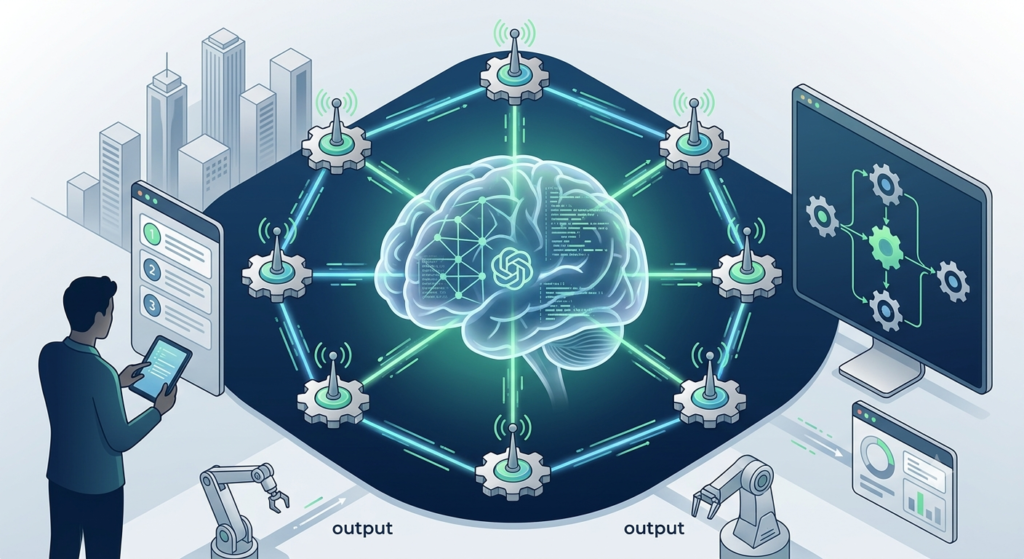
- DRACO: Dynamic Rubrics for Verifier-Free Long-Horizon Agent RL
What happened: IBM researchers developed DRACO, a reinforcement learning method that dynamically generates multi-criteria rubrics during training to assign step-by-step credit to AI agents without requiring programmatic verifiers. By asking a frozen judge to cite responsible action turns and redistributing trajectory-level scores into per-step advantages in closed form, the system eliminates the need for hardcoded unit tests.
Why it matters: Enables effective reinforcement learning for complex, multi-step agent tasks in enterprise domains where automated checkers do not exist.
Source: arXiv:2609.04098
- Natural Language Interaction Protocol (NLIP) Standardizes Agent-to-Agent Communication
What happened: Computer scientists introduced the Natural Language Interaction Protocol (NLIP), an application-level standard designed to unify natural language communication, negotiation, and message passing between client and server AI agents. The protocol specifies structured message schemas, negotiation steps, and error-handling routines to replace ad-hoc integrations across heterogeneous agent networks.
Why it matters: Establishes a universal application standard for multi-agent interoperability, allowing diverse AI tools and assistants from different ecosystems to collaborate seamlessly.
Source: arXiv:2609.04135
- OpenAgentFlow Enforces System-Wide Safety Boundaries for Heterogeneous Agent Fleets
What happened: Safety researchers unveiled OpenAgentFlow, an open-source framework designed to enforce centralized safety guardrails and fleet-level resource accounting across multi-agent systems. The architecture manages risk budgets and controls action admission before autonomous agents execute cascading, high-risk operational steps.
Why it matters: Prevents catastrophic failure cascades and unauthorized actions when dozens of autonomous agents operate concurrently in production environments.
Source: arXiv:2609.00015
- Gated-Memory Routing Optimizes Multi-Agent LLM Context Efficiency
What happened: Engineers introduced a Gated-Memory Routing architecture that dynamically controls what context multi-agent LLM systems retain, route forward, or discard during collaborative task execution. By filtering redundant trajectory noise and selectively routing key memory states, the framework maintains tight context management across extended interactions.
Why it matters: Drastically reduces context window bloat and inference token costs while enabling multi-agent fleets to sustain long-horizon problem-solving.
Source: arXiv:2609.00237
- Speculative Macro Commit Accelerates Agentic Tool Execution Turnaround
What happened: Researchers presented Speculative Macro Commit (SMC), a runtime mechanism that speeds up tool-using AI agents by pairing a primary actor model with a faster speculative drafter model. The speculative drafter continuously predicts and executes future tool-action chains on isolated environment snapshots while the main model processes official trajectories.
Why it matters: Directly cuts down the serial action-observation latency bottlenecks that stall real-time autonomous AI agent pipelines.
Source: arXiv:2609.00073
- Claude Science Workbench & Model Hardware Standard Enable Autonomous Lab Workflows
What happened: Anthropic launched Claude Science, an AI workbench pairing a coordinating agent with over 60 specialized domain connectors and on-demand compute scaling across HPC clusters. Alongside the platform, Anthropic opened a research preview of the Model Hardware Standard (MHS) to allow AI agents to directly command laboratory instruments and manufacturing equipment.
Why it matters: Moves AI research assistants beyond literature analysis into direct, end-to-end management of physical hardware and heavy computational pipelines.
Source: Anthropic
Emerging Trends:
- Dynamic Process Rewards Over Sparse Verifiers: Reinforcement learning for agents is shifting away from binary outcome checkers toward dynamic, turn-level credit assignment that dynamically adapts as the agent improves.
- Standardized Fleet Governance & Protocols: Emerging protocols like NLIP and safety layers like OpenAgentFlow indicate that agent deployment is transitioning from isolated scripts to standardized, inter-operable fleet architectures.
- Latency & Context Optimization for Agentic Loops: Frameworks like Gated-Memory Routing and Speculative Execution are actively tackling token cost inflation and serial turn-based latency in multi-agent workflows.