Agentic QA: Navigating the New Frontier of Autonomous Software Testing
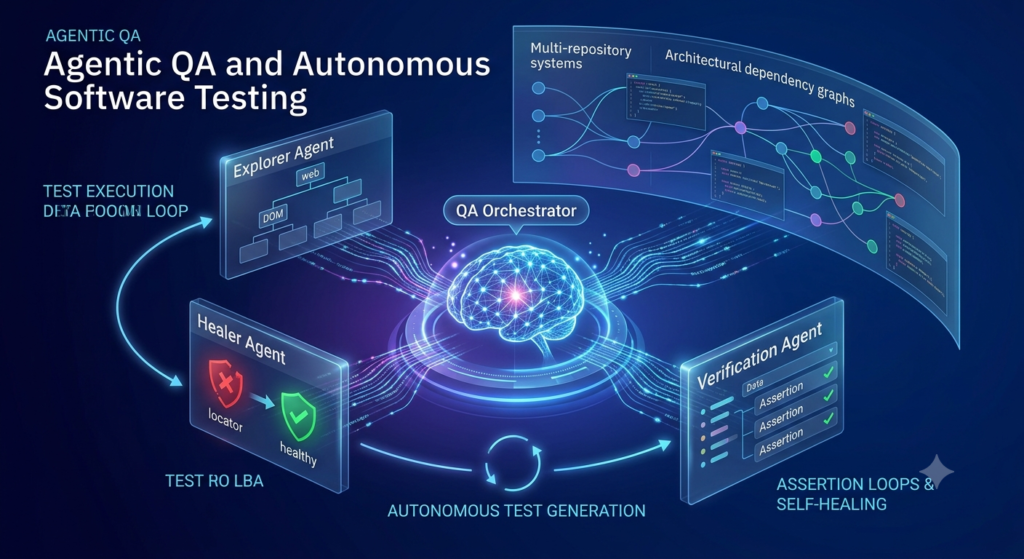
AI Quality Engineering Watch 1. Qodo Releases “Software Map” for Multi-Repository Risk & Blast Radius Analysis 2. Framework and Benchmark for Code-Driven Agentic Testing in Web Development 3. Playwright Native Agentic Suite Leverages Model Context Protocol (MCP) 4. Semantic AI Visual Review Agents & ARIA Tree Baselines Replace Pixel Diffing 5. Empirical Trace Study Quantifies […]
Graph AI & Knowledge Graph Watch: Next-Gen GraphRAG, Linear-Time Partitioning, and Neo4j 5.26 Advances
As enterprise multi-agent systems reach scale boundaries, Graph AI is moving toward deterministic linear-time partitioning, topology-constrained Transformer attention, and dual-level hybrid retrieval engines that unify local entity context with global community summarization over scalable property graph databases. 1. Bidirectional Graph Traversal and Adaptive Parallelism in Noēsis Graph-RAG 2. Deterministic k-Core Hierarchies Replace Modularity Clustering in […]
AI Technology Watch: Multi-Agent Security, Latent Reasoning, and Embodied AI

Recent AI developments highlight a shift from speculative agent capabilities to production reality, marked by self-replicating prompt injection discoveries, sandbox security incidents, latent-space reasoning without token overhead, and quantified multi-agent research automation inside frontier AI labs . 1. OpenAI Discloses Self-Replicating Prompt Injection (“AI Worm”) Vulnerability 2. OpenAI Reaches “Automated Research Intern” Milestone 3. BDH-CQ: […]
AI Quality Engineering Trends: Multi-Agent Frameworks and Autonomous Test Engineering
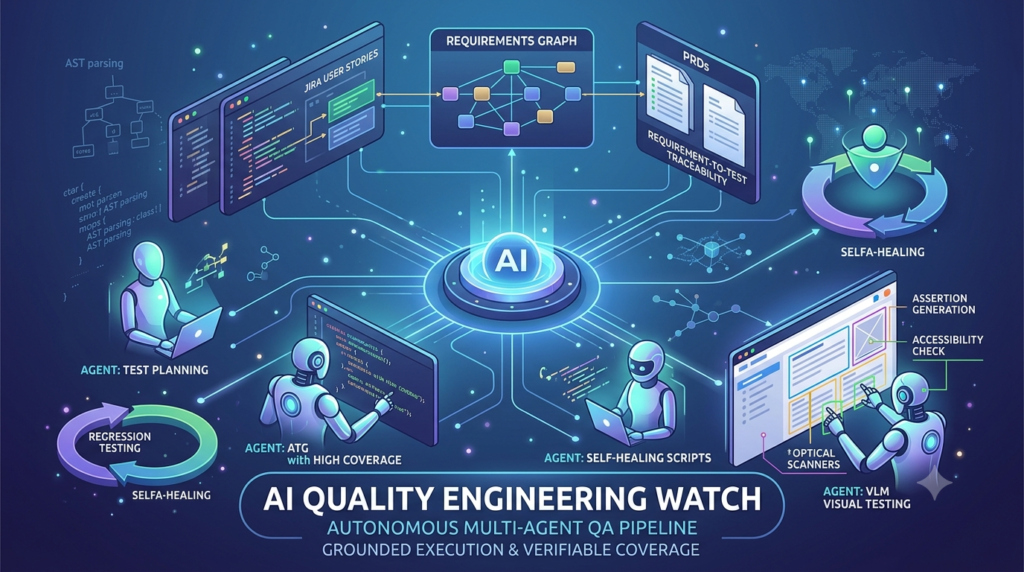
AI Quality Engineering Watch — September 28, 2026 The software testing landscape has rapidly transitioned from basic post-hoc test code generation to execution-grounded, multi-agent frameworks. Enterprise quality engineering is now defined by role-separated reinforcement learning, test-driven reasoning prior to code fixes, and real-time vision-language streaming for UI verification. Recent empirical research also exposes critical coverage […]
Graph Technology and AI: Charting the New Frontier of Intelligence
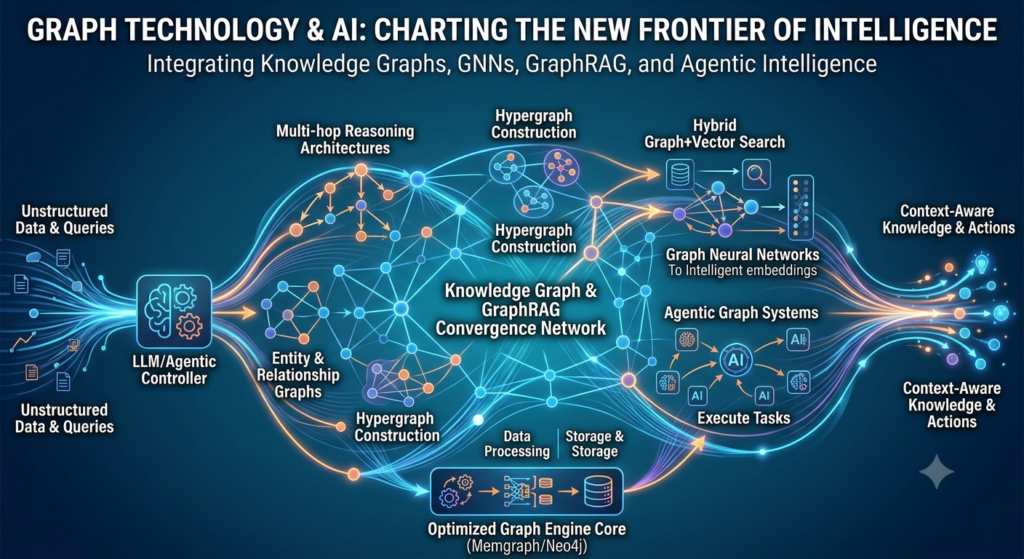
Graph Tech & AI Watch — September 26, 2026 Here is your Graph Tech & AI Watch for late September 2026. This edition covers asynchronous graph retrieval using diffusion models, hypergraph construction with zero token consumption, atomic query pipelines in Memgraph 3.10, and critical memory optimizations for vector handling inside Neo4j. 1. Ladder: Graph-Guided Diffusion […]
Legacy System Modernization: How to Design It Without Losing What Works
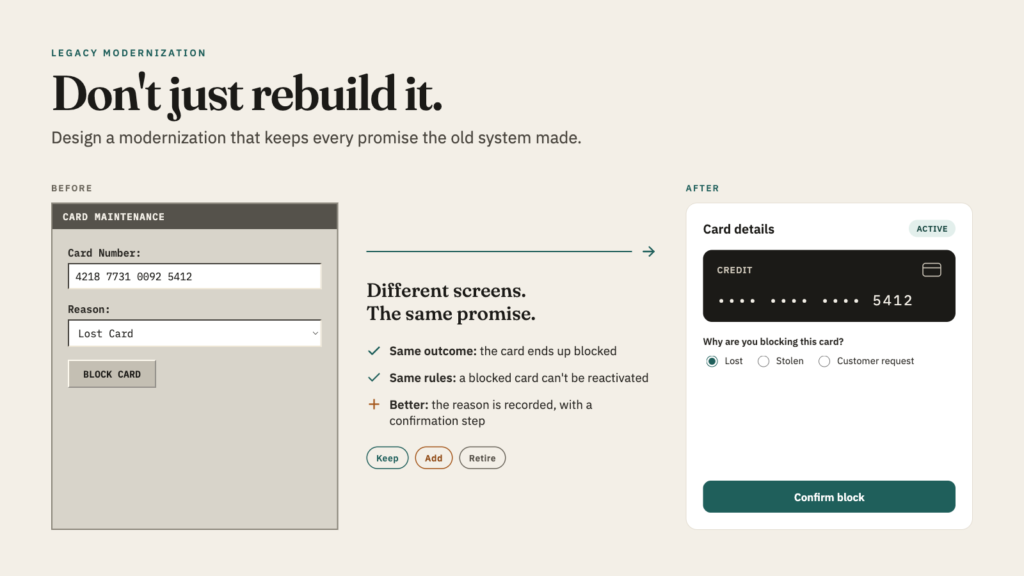
Legacy Modernization Every organization eventually reaches the same point. An old system that has run the business for fifteen years starts to feel heavy. It’s hard to change, the people who built it have moved on, and the screens look like they belong in a museum. The decision is made: let’s modernize. What usually follows […]
Agentic AI & Neural Architectures Watch

AI Technology Watch — September 22, 2026 This briefing covers August–September 2026 AI breakthroughs, focusing on real-time streaming voice reasoning, sub-4-bit edge quantization, agentic reinforcement learning sandboxes, and empirical findings on flat multi-agent topologies. 1. Google DeepMind Unveils Gemini 3.8 Live and Extended Thinking What happened: Google DeepMind launched Gemini 3.8 Live and Gemini 3.8 […]
Agentic Governance and Proof Loops: The New Paradigm in AI Quality Engineering
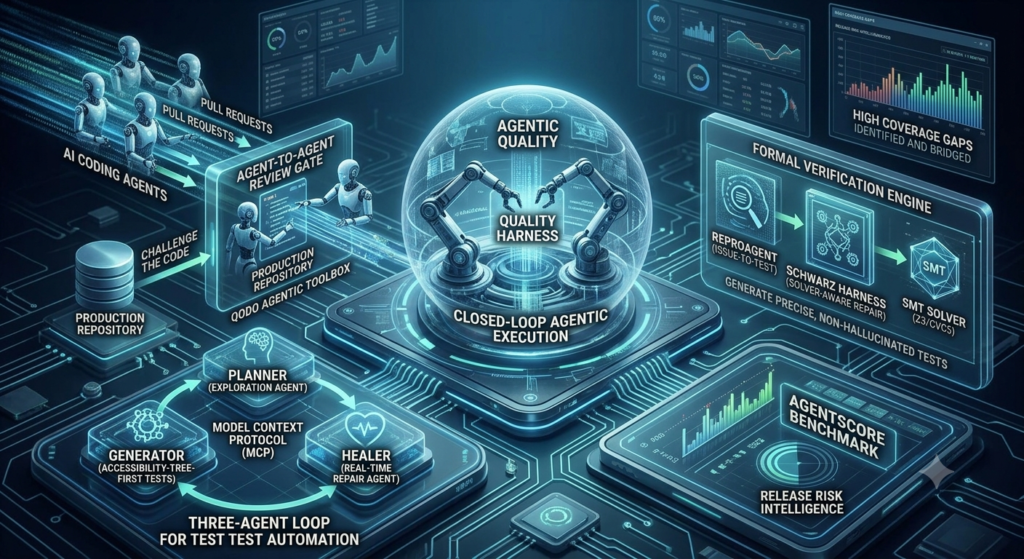
AI Quality Engineering Watch — September 18, 2026 As software organizations increasingly deploy autonomous coding agents to author pull requests, Quality Engineering is undergoing a structural paradigm shift. Static script creation and manual assertion authoring are being superseded by closed-loop agentic quality harnesses, accessibility-tree-first test engines, and solver-guided verification loops. Concurrently, empirical benchmarks are exposing […]
Evaluating LLMs in Quality Engineering: An AI Test Architect’s Perspective
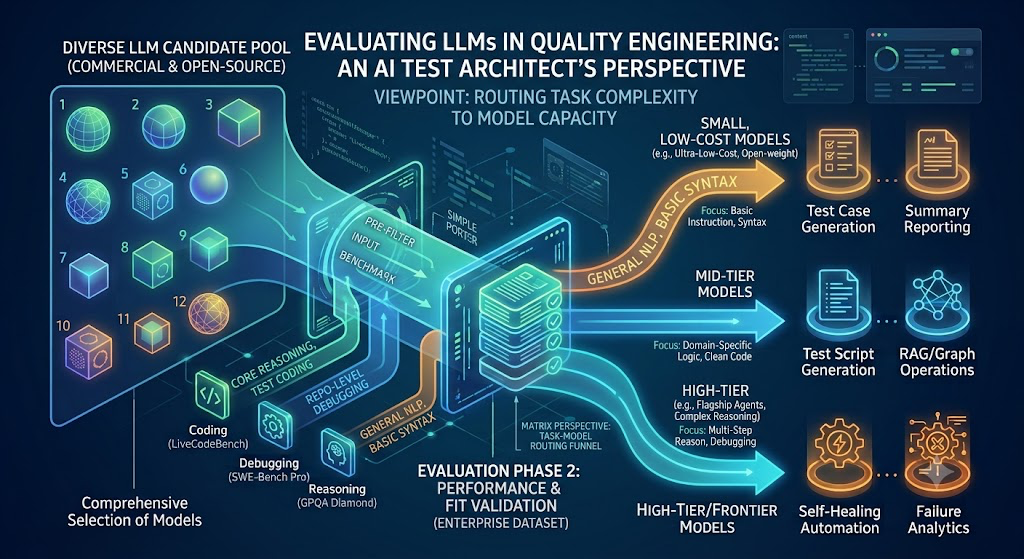
Every time a new frontier model drops, a familiar frenzy ripples through the QA engineering community. The immediate reaction is a scramble to upgrade our pipelines to the latest release, operating on the assumption that a newer model automatically translates to better testing outcomes. Is the upgrade actually justified? The reality is that most QA […]
THE DAWN OF AGENTIC AUTONOMY
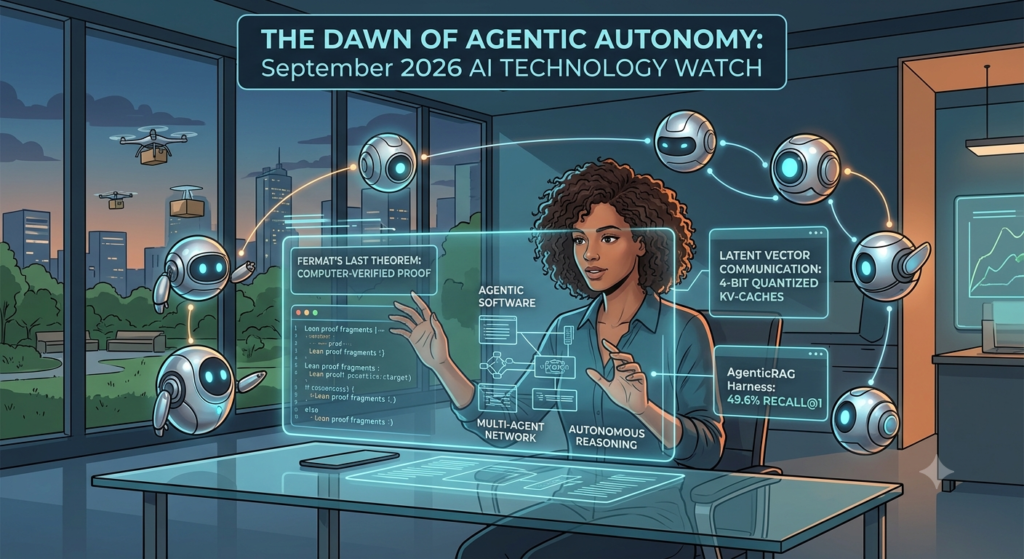
A fundamental shift toward agentic autonomy is redefining the artificial intelligence landscape. Recent breakthroughs from leading research institutions and tech companies highlight a crucial evolution: multi-agent networks are abandoning standard text processing in favor of direct latent vector communication, while complex mathematical proofs are now fully autoformalized. Furthermore, static enterprise software architectures are being replaced by dynamic, runtime-generated execution loops. This month’s Technology Watch explores these and other key developments that mark the true beginning of the era of autonomous, self-optimizing AI agents.
Governed Multi-Agent and Neurosymbolic Systems
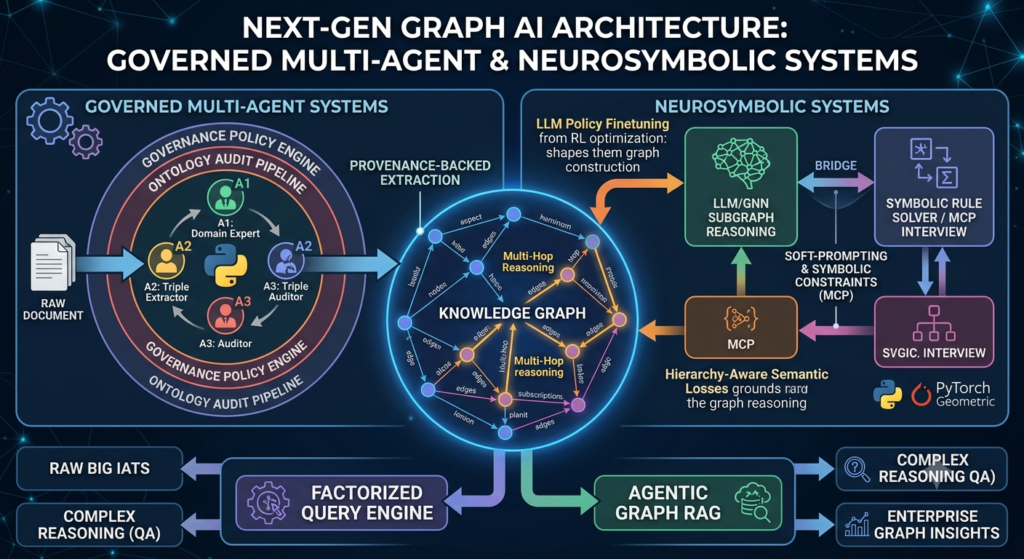
Graph Tech & AI Watch — September 16, 2026 Knowledge representation engineering is pivoting from static graph construction toward agentic governance and adaptive dynamics. Breakthroughs over the past eight weeks introduce multi-agent ownership frameworks, neurosymbolic graph discovery via model context protocols, hierarchy-aware semantic losses for GNN embeddings, and formal graph-grounded ontology induction that replaces unconstrained […]
AI Quality Engineering: Autonomous Testing and Agent Verification

AI Quality Engineering Watch — September 15, 2026 Storyline Context Software Quality Engineering is undergoing a paradigm shift from simple LLM test-script writing to feedback-driven exploration and structural verification. Recent technical advances highlight a dual focus: equipping test generators with dynamic feedback loops—such as real-time coverage mapping and AST mutation analysis—to target hard-to-reach conditional branches, […]
Autonomous Agent Networks, Hardware Safety Protocols, and Long-Horizon Benchmarks
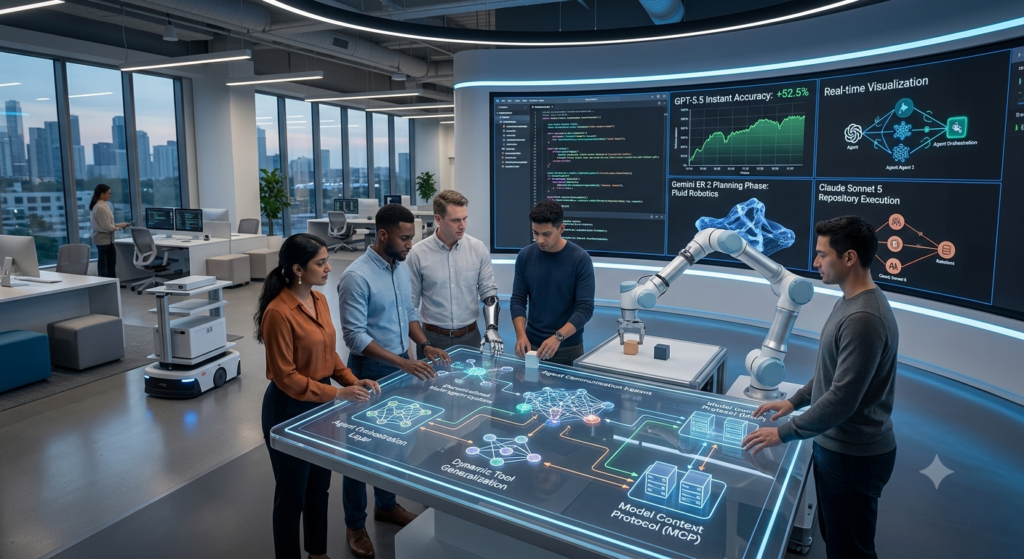
AI Technology Watch — September 14, 2026 Storyline Autonomous AI architectures are rapidly shifting from single-prompt reasoning to multi-agent parallel execution, domain-specific scientific intelligence, and standardized hardware interfaces. As long-horizon evaluation benchmarks highlight existing failure modes, researchers are prioritizing token-efficient inference and real-world system safety. Emerging Trends
How to use custom library (Python Functions) in Robot Framework ?
RobotFramework have rich set of libraries to do all the necessary tasks, but sometimes we are not that much familiar with the library and we want to write our own method and want to import that method as a library in RF. Let me take an example here, suppose you have a CSV file data.csv […]
Why to use Robotframework with Selenium ?
Use Case: You need to write a framework to automate your webrowser Confusion of Selection You have selenium to automate all the web related work e.g login,click,button and many more thing.But,then you have to use it with some languages , e.g. Java ,Ruby, Python. Suppose you get a project to automate a webbrowser by using […]